

The staff was extremely knowledgeable and efficient. Everyone was so happy to help.
C
Casey Whipple
a month ago
Testing & Treatment
Pinpoint exactly what triggers your allergies, so your treatment actually works. Accurate testing is the first step to real relief. At Cure Allergy Clinic, Dr. M. Waseem Imam, D.O., and Dr. Baraa Osman identify the root cause of your symptoms, then build a personalized plan to manage them, including long-term options like immunotherapy. We provide comprehensive allergy testing for children and adults across Arlington, Irving, and Mansfield, TX.
Quick Answer
Allergy testing identifies the specific substances your immune system reacts to, using a skin test, a blood test, or a patch test. Results let your allergist build a treatment plan tailored to your exact triggers rather than guessing.
Allergy testing is a diagnostic process that pinpoints the sources of your allergic response. Allergies begin when your immune system mistakes a safe substance for a threat and releases chemicals that cause a reaction every time you are exposed. Both food and environmental substances can be triggers.
Testing arms you with knowledge about what sets off your symptoms and, just as importantly, gives your provider what they need to create customized treatment. Cure Allergy Clinic offers a wide array of testing services, including for:
Unlike many practices, we also check for food sensitivities, which can be tied to irritable bowel syndrome (IBS), bloating, and food allergies.
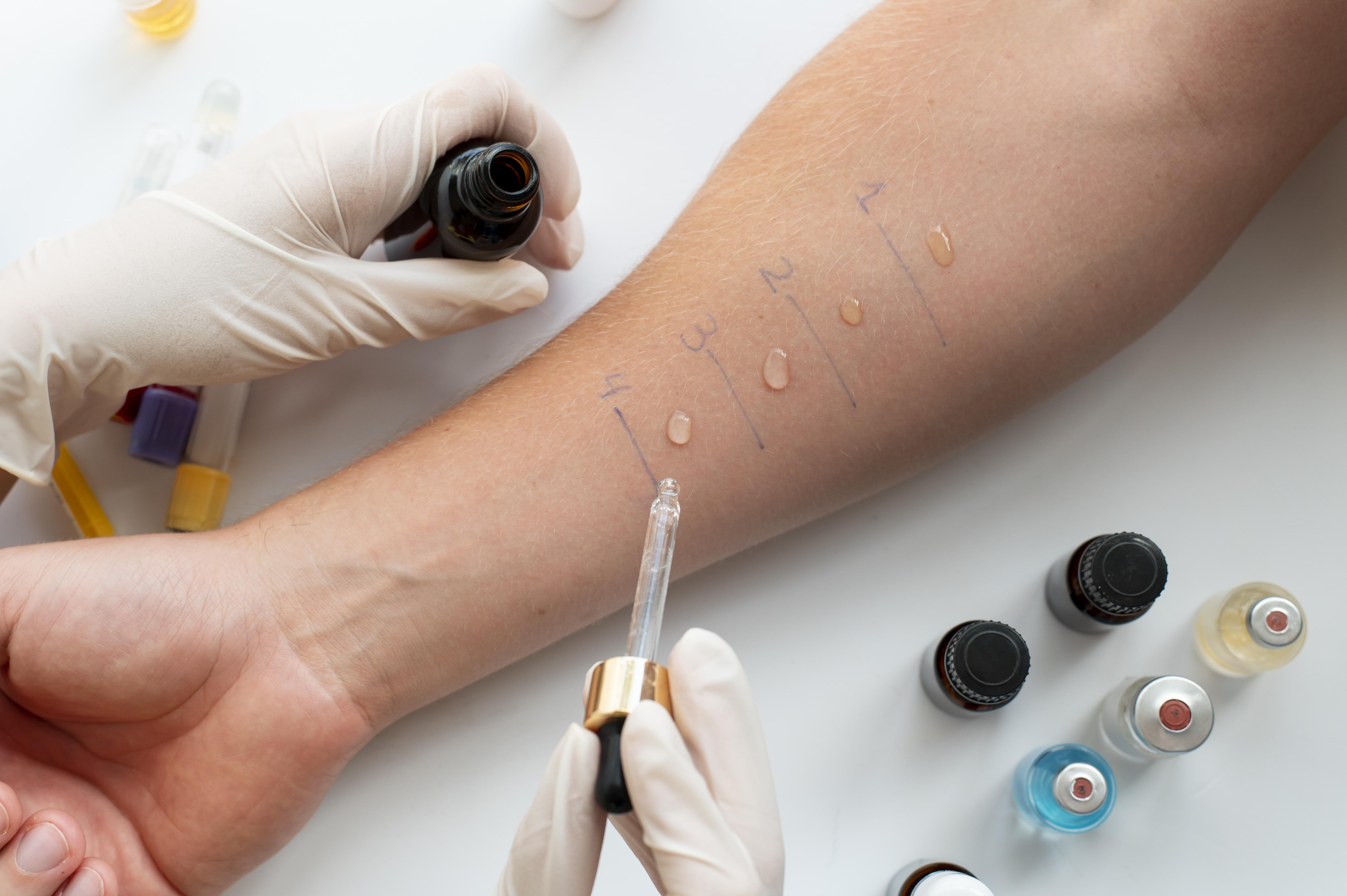
Allergy testing works by safely exposing you to tiny amounts of suspected allergens and watching how your body responds. A reaction at the test site indicates a sensitivity to that substance. Both skin-prick and skin-injection methods can screen for many different allergens at once.
We start by reviewing your medical history and performing a physical examination, then recommend the test best suited to your situation. Once we detect the root cause of your allergens, we prepare a comprehensive plan to build your immunity and, when appropriate, recommend long-term therapy such as immunotherapy.

You should consider allergy testing if your symptoms are persistent, unexplained, or not responding to over-the-counter medication. Testing is helpful for both adults and children. Consider getting tested if you experience:
If you suspect you have allergies or your symptoms significantly affect your quality of life, our Arlington, Irving, and Mansfield allergists can assess your history, examine you, and recommend the right test to identify your triggers.
Most allergy testing is quick, low-discomfort, and screens for many allergens in a single visit. Here is what to expect from each method.
For best results, patients typically need to be off antihistamines and allergy medication for 4 to 7 days before testing.
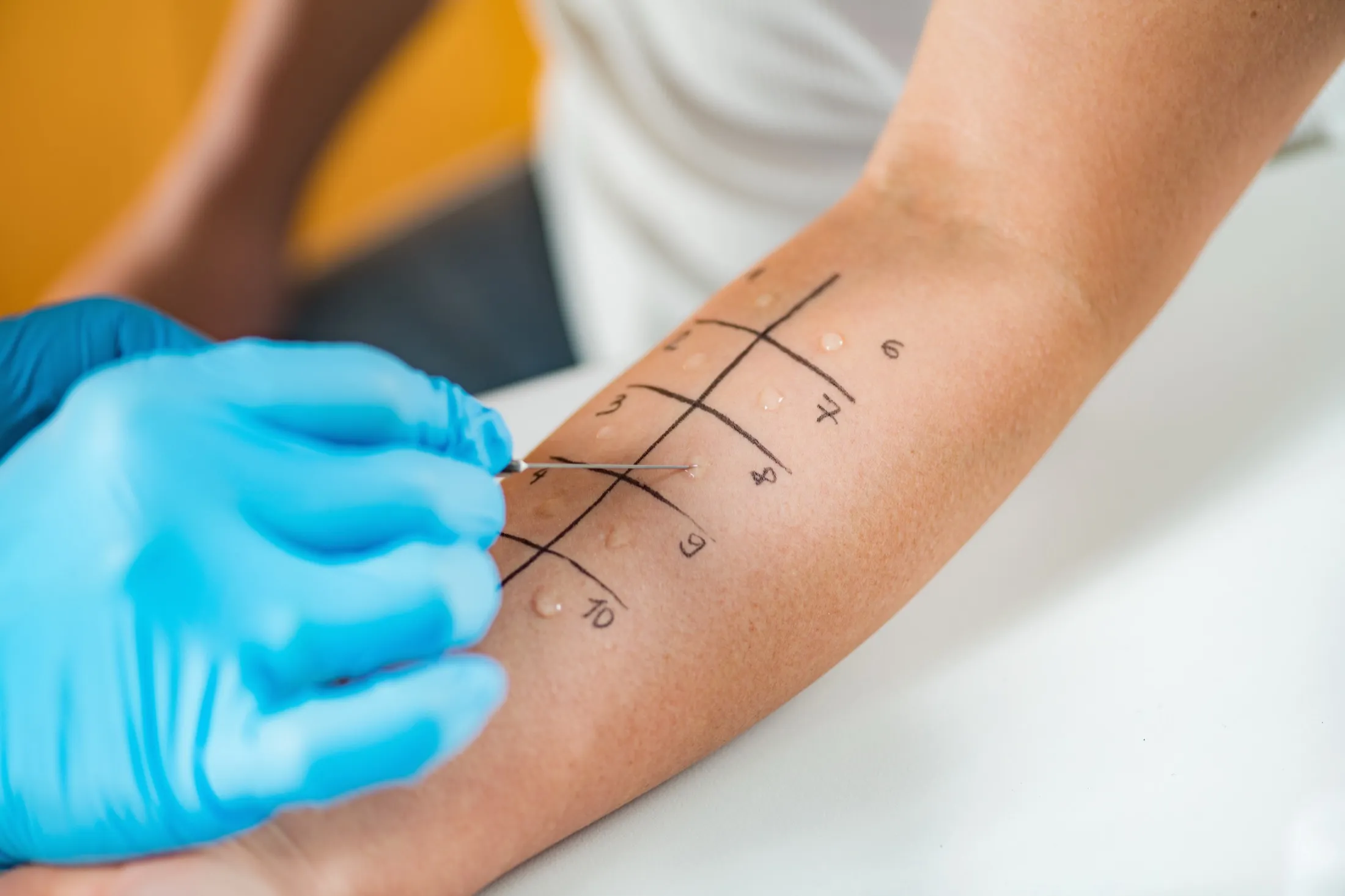
The right test depends on your symptoms, your skin, and the allergen being checked. We offer these options:
| Test | How it works | Best for |
|---|---|---|
| Skin prick test | A tiny prick applies allergen to the skin; reactions read quickly. | The most common, fast screening across many allergens. |
| Intradermal test | Allergen injected just under the skin of the arm. | Confirming or detecting sensitivities a prick test may miss. |
| Blood test | Measures allergic antibodies in a blood sample. | Patients with eczema or psoriasis, or when testing a powerful allergen that could cause a strong reaction. |
| Patch test | 20 to 30 allergen patches placed on the skin, no needles. | Reactions to medications, fragrances, latex, hair dyes, and preservatives. |
A blood test is often chosen when you have a skin condition such as eczema or psoriasis, or when your provider is checking for an allergen strong enough to cause a significant reaction.
Common Questions
Skin prick testing causes little to no pain. Intradermal testing involves a small injection under the skin, and blood testing is a standard blood draw.
Food, environmental allergens like pollen, dust mites, and weeds, plus medications, fragrances, latex, and more through patch testing. We also test for food sensitivities, GI-related allergies, and lung and immune function.
Skin testing is the most common. A blood test is used if you have a skin condition like eczema or psoriasis, or when testing a powerful allergen that might cause a strong reaction.
Stop antihistamines and allergy medications for 4 to 7 days before your test, since they can interfere with results.
A needle-free test where 20 to 30 patches with small amounts of substances like medications, fragrances, latex, hair dyes, and preservatives are placed on your skin to check for reactions.
Your provider builds a personalized treatment plan, which may include avoidance guidance, medication, or immunotherapy such as allergy shots or sublingual drops.
Yes. We test both children and adults and tailor the approach to the patient.
Cure Allergy Clinic provides allergy testing in Arlington, Irving, and Mansfield, TX, and surrounding communities.
Cure Allergy Clinic
Helping our patients by offering affordable treatments.
We optimize and personalize your treatment regimen for maximum relief.
Get the care you need, when you need it most, with flexible scheduling.
Via immunotherapy, we focus on the disease and not just the symptoms.

Arlington Today — Editor’s Choice 2021
We are proud Cure Allergy Clinic has been named Editor’s Choice of 2021 by Arlington Today magazine for best Allergist in Arlington, TX!
Why We're Different
In-Network Coverage






Contact Us
4120 N Collins St. Suite 100 Arlington, TX 76005
Business Hours
1329 W Walnut Hill Lane Suite 104 Irving, TX 75038
Business Hours
1701 Fountainview Dr, Suite 100, Mansfield TX 76063
Business Hours
Cure Allergy Clinic
The team at Cure Allergy Clinic is dedicated to providing high-quality, compassionate care to alleviate your allergy symptoms so you can enjoy doing what you love. With our expertise, our board-certified physicians will educate and guide you through your conditions.
You don’t have to live with your allergies! Give our office a call at (817) 678 – 5575 today or book an appointment online for a consultation with one of our physicians.